On this page
Plenty of rentals on the Wasatch Back — Kamas Valley cabins, canyon properties, homes outside city limits — have no curbside pickup at all. No truck comes on Tuesday. The county doesn’t collect. And the lease says “tenant is responsible for trash,” which works right up until it doesn’t: a moved-out tenant’s pile in the garage, a porch stack that a moose found first, or an STR guest who left twelve bags and a broken futon.
If you manage properties out here, trash isn’t a chore — it’s a system you either designed or inherited. Here’s the designed version.
The no-curbside reality
Where there’s no municipal service, the options are self-haul to the Three Mile Canyon landfill or the Wasatch County station, a private hauler contract, or nothing — and “nothing” is what most tenants default to. Your lease can assign responsibility, but it can’t make a tenant with a sedan drive bags to Coalville. The properties that stay clean are the ones where the manager made disposal easier than neglect.
Three pieces do that:
- Lease language that names the mechanism, not just the duty. Not “tenant responsible for trash removal” but where it goes, how often, and what wildlife-resistant storage is required between hauls.
- Secured storage between hauls. This is bear and moose country; unsecured bags on a porch are an invitation with a smell. Hard-sided, latched storage is the difference between a rental and a buffet.
- A scheduled bin for every event that produces volume — turnovers, cleanouts, evictions, seasonal purges. Which is the rest of this guide.
Turnovers: reset the property in one drop
The move-out is where deferred trash comes due. Whatever accumulated in the garage, the crawl space, and the shed is now your problem on a deadline, because the next tenant — or the listing photos — can’t wait.
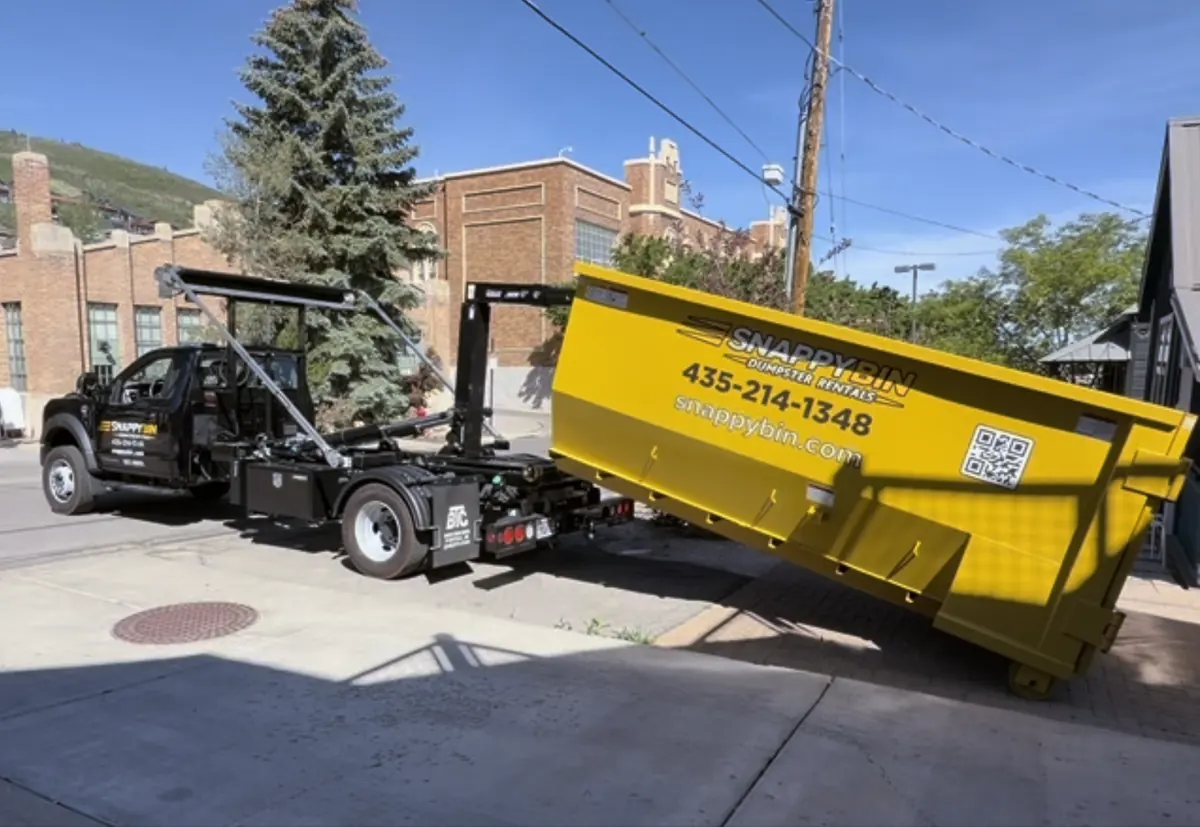
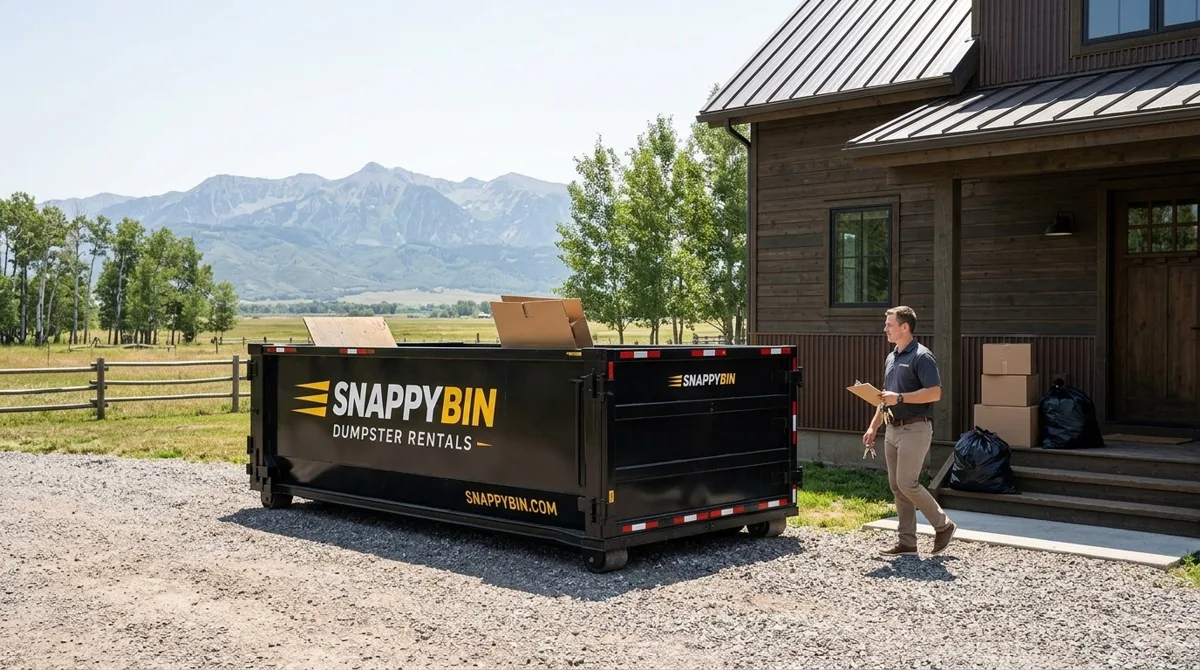
The clean pattern: schedule a bin for the day after move-out. Your cleanout crew fills it as they work — abandoned furniture, bagged junk, the mystery pile behind the shed — and the property resets in one pass instead of a week of pickup-truck trips. Delivery schedules next-day as standard, seven days a week, nobody needs to be on site, and the flat rate includes disposal. One heads-up for planning: mattresses can’t go in the bin — handle those separately with the mattress guide.
Short-term rentals: turnover trash is a compliance item
Summit County’s nightly-rental rules expect operating STRs to have adequate trash capacity and clearly posted disposal instructions for guests — and neighbors will report the house whose cans overflow every checkout. For STRs in no-curbside areas, that means guest-facing instructions that actually work (“bag everything, latch the bin box” beats “please respect the property”), plus a scheduled bin whenever you do a deep reset, furniture swap, or post-season refresh. Verify your specific license requirements with the county clerk — rules have been actively updated the last couple of years.
Evictions, estates, and the big ones
Some cleanouts aren’t turnovers, they’re excavations. For an eviction aftermath or an estate situation, think in pickup-load math: a 15-yard bin holds about 4–5 truck loads. If the job would mean two or more dump runs, the bin already wins on labor alone — and your crew stays on the property working instead of waiting in a gate line.
Make it one phone call
We work directly with property managers across Park City, Heber, Midway, and the Kamas Valley — scheduling around turnovers, placement that satisfies HOA visibility rules, and billing that fits a multi-property operation instead of a homeowner checkout. We also supply bins for community cleanup events if your HOA runs them. Call or text 435-214-1348 with your property list and we’ll build the cadence; flat-rate details are on the pricing page.
Frequently asked questions
How do property managers handle trash at rentals with no curbside service?
Do renters need to be home when a dumpster is delivered?
Are your dumpsters allowed in HOA communities?
Local facts in this guide are checked against official county and city sources before publishing, and re-checked when we update the page. Spot something out of date? Tell us — we'll fix it.