On this page
Debris is the least interesting thing on your jobsite, which is exactly why it eats so much of your week. Every hour a lead carpenter spends driving a trailer to Coalville is an hour you billed for carpentry and spent on hauling. This is the playbook our contractor accounts actually use to keep waste off the critical path.
The billable-hour math
A dump run from a Park City jobsite is never “quick”: load the trailer, tarp it, drive out, wait at the gate, tip, drive back. Call it two hours with two guys on it — four labor hours per run, plus gate fees, plus whatever a screw in a tire costs you that week. Two runs a week and you’ve quietly lost a crew-day.
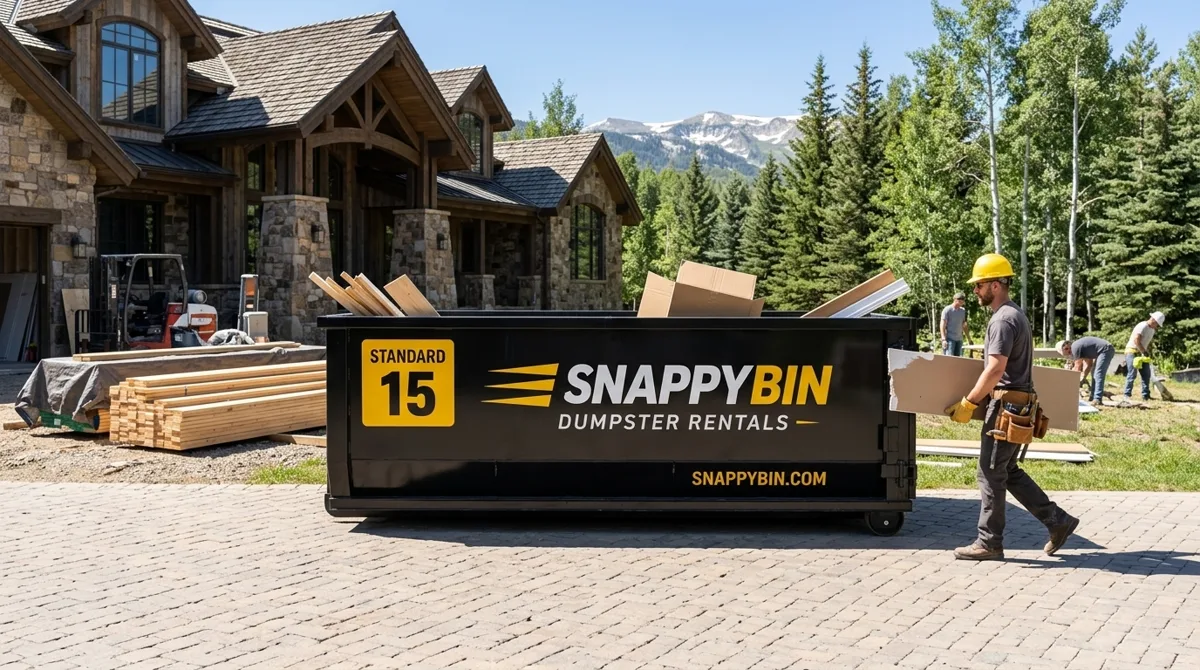
The alternative is boring and effective: a bin sitting on site from demo day, filled as the work happens, swapped when it’s full. Nobody stops working to deal with trash. That’s the whole trick.
Time the bin to the phase, not the project
The most common mistake we see is one bin ordered at the start and overflowing by drywall. What works better:
- Demo: bin arrives the morning tear-out starts — demo debris is bulky and fills fast.
- Rough-in through drywall: swap to a fresh bin; offcuts, packaging, and drywall scrap accumulate steadily.
- Finish: final bin for flooring waste, trim offcuts, cardboard, and the end-of-job site scrub.
Tell us your phase dates when you book and we’ll reserve capacity around them — swaps land same-week, and delivery schedules next-day as standard, often same-day with 4–5 hours’ notice depending on route.
Weight discipline (the fee you can avoid)
The flat rate includes up to 2,000 pounds of disposal. Most remodel debris rides well under that — but a few materials blow through it fast:
- Roofing: shingle tear-offs are dense. Keep loads level with the rim and talk to us about multi-layer tear-offs before you load.
- Drywall: heavier than it looks in volume. Fine in mixed loads; watch it in bulk.
- Concrete, dirt, brick, asphalt: not accepted in a standard load at all — that stream belongs at the Henefer C&D landfill, or ask us about a dedicated heavy-material plan.
The full allowed/prohibited list is on the FAQ — the short version for jobsites: no liquids, no batteries or propane, no refrigerant appliances, no tires or mattresses.
Access: the Wasatch Back is not a normal market
Half our service area is steep, gated, or HOA-governed, and the bin plan has to survive all three:
- Tight and steep sites get the Compact 15 — same capacity, smaller footprint, built for the driveways big roll-offs can’t reach. (New to roll-offs or comparing the two bins? See the roll-off dumpster rental page.)
- Gated communities (Deer Valley, Empire Pass, Promontory, The Colony): give us gate codes and staging constraints at booking and we plan the approach. Premium-access areas may carry a surcharge, quoted up front.
- HOA jobs: placement, duration, and visibility rules vary by community — tell us the restrictions and we work within them.
- Street placement in Park City needs right-of-way approval from the city before it’s scheduled — details in the permits FAQ. On-driveway placement usually needs nothing.
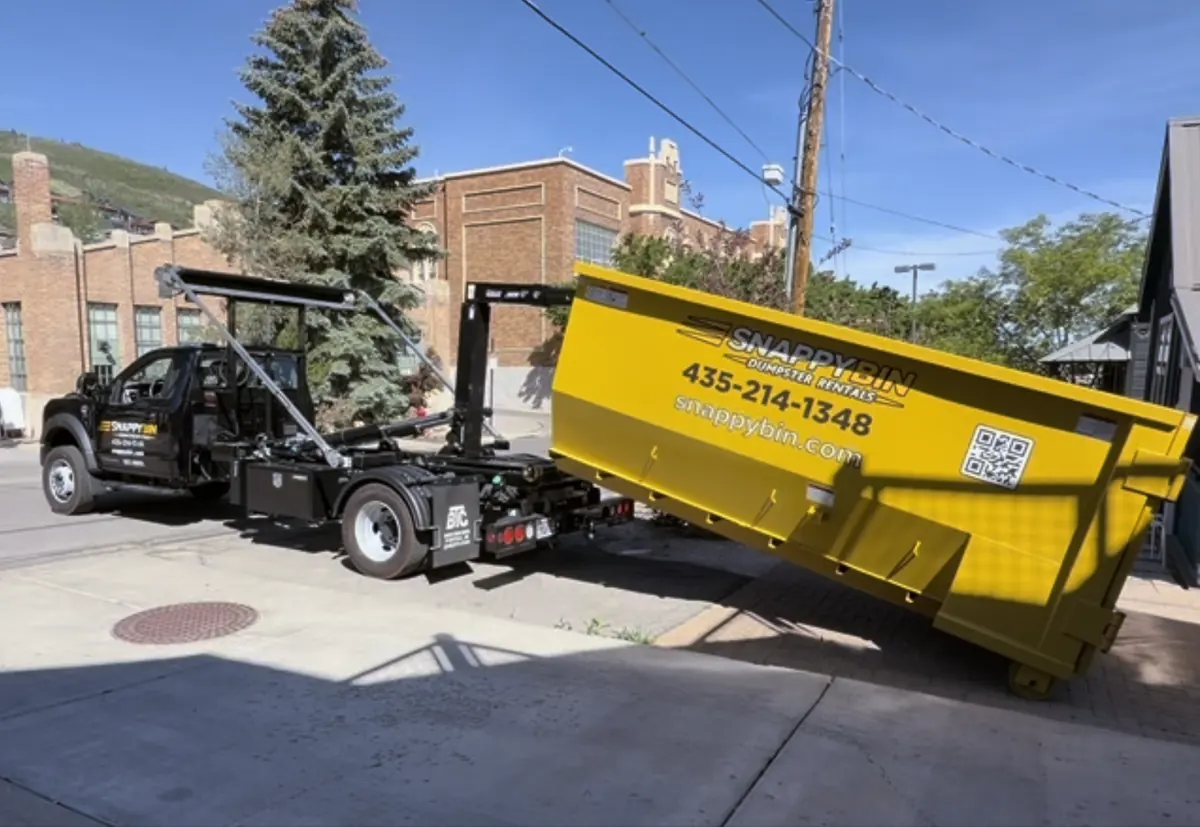
- Physically, the truck wants about 60 feet of straight approach and overhead clearance to set a bin.
Winter changes the plan, not the answer
We deliver year-round. What we need from your site in the snow months: the placement area plowed and sanded, and a little schedule flexibility in heavy weather. What you get back: no crew trailer runs on canyon roads in January, which your insurance carrier also prefers.
Setting up an account
If you’re running more than the occasional bin, don’t book like a homeowner. Call or text 435-214-1348, tell us your typical project mix and timelines, and we’ll set up recurring pricing, capacity holds on your key dates, and billing that matches how you invoice. More detail in the contractor FAQ, flat-rate numbers on the pricing page, and the full contractor offer on the construction dumpster rental page.
Frequently asked questions
Do you offer contractor pricing in Park City?
Can I get a dumpster swapped mid-project?
Can you place a bin on a tight or gated jobsite?
Local facts in this guide are checked against official county and city sources before publishing, and re-checked when we update the page. Spot something out of date? Tell us — we'll fix it.